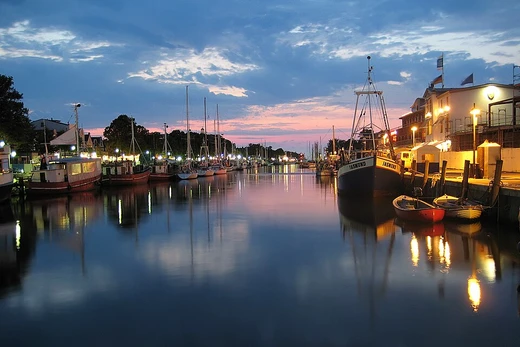
Bridgewater Canal
First great achievement of the canal age in Britain.

The Bridgewater Canal connects Runcorn, Manchester and Leigh in North West England.
- Length
- Connects Runcorn, Manchester, and Leigh
- Commissioned by
- Francis Egerton, 3rd Duke of Bridgewater
- Engineer
- James Brindley
- Key feature
- Barton Aqueduct over River Irwell
- Status
- Privately owned, navigable throughout its history
Lore & Background
Francis Egerton, 3rd Duke of Bridgewater, owned coal mines in Worsley that supplied fuel for steam engines during the Industrial Revolution. Transporting coal by river or packhorse was inefficient and expensive, and his mines suffered persistent flooding due to permeable sandstone overlying the coal seam. After visiting the Canal du Midi in France and observing the Sankey Canal, the Duke planned an underground canal at Worsley connected to a surface canal to Salford, which would drain the mines, provide water for the canal, and eliminate the need to lift coal to the surface. The canal boats could carry 30 long tons pulled by one horse, over ten times the cargo per horse possible with a cart. James Brindley was brought in for technical expertise and suggested varying the route away from Salford, instead crossing the River Irwell via an aqueduct at Barton-upon-Irwell and continuing to Manchester. The original section from Worsley to Manchester had no locks, but the later extension to Runcorn—also designed by Brindley—included a flight of ten locks to connect the canal to the River Mersey. Brindley surveyed the route, and a flight of ten locks was built at Runcorn to connect the canal, which was 90 feet above the Mersey. It is one of the few canals in Britain not nationalised and remains privately owned.
Reader's Guide
The Bridgewater Canal is significant as the first great achievement of the canal age, inspiring a period of intense canal building in Britain known as Canal Mania. Within a year of its opening, the price of coal in Manchester fell by about half, showing the economic impact of efficient transport. The canal's success helped inspire a wave of canal construction across Britain. Though the Sankey Canal opened earlier, the Bridgewater Canal is considered the first great achievement due to its engineering and public impact. It remains privately owned and is used by pleasure craft today.
Did You Know?
- The Bridgewater Canal was the first great achievement of the canal age in Britain.
- Within a year of its opening, the price of coal in Manchester fell by about half.
- The canal is one of the few in Britain not nationalised and remains privately owned.
Engineering & Construction Principles
The Bridgewater Canal, like all engineered waterways of its kind, represents a feat of hydraulic construction that demands careful management of water sources, elevation changes, and channel geometry. Canals are built through one of three primary methods—or a combination thereof—depending on the terrain and available water. Where no natural stream exists, the channel body is excavated or its banks are formed from dykes and levees of packed earth, stone, or concrete. The cross-sectional profile of the finished channel is termed the canal prism. Where the route must change elevation, engineering works such as locks, lifts, or elevators are required to raise and lower vessels between slack water levels. In some cases, a canal is carved by dredging a channel through the bed of an existing lake, which is then drained to reveal the new waterway. In others, parallel dikes are constructed within a lake to define the canal corridor. All of these approaches require an external water source to maintain the channel's flow, and pumping stations may be necessary to keep surrounding land dry.
Industrial Engine of an Era
Canals of the Bridgewater's type were not merely transport routes; they were the circulatory system of an entire industrial civilization. The movement of bulk raw materials—coal, ores, and other heavy commodities—was practically a prerequisite for urbanization and industrial growth, and without water transport these goods were difficult and only marginally affordable to move. By making such freight practical, canals fueled the Industrial Revolution itself, spawning new research disciplines, new industries, and economies of scale that raised living standards across industrialized societies. The Bridgewater Canal, as part of this broader network of inland waterways, participated in that transformative era when the conveyance of goods by barge and boat was the dominant mode of heavy freight. These waterways carried free, calm surface flow under atmospheric pressure, functioning as artificial rivers that could be thought of as the arteries connecting mines, factories, and growing cities. Their slack water levels—reservoirs of low-speed current flow created by a series of dams and locks—provided the stable, predictable conditions necessary for reliable commercial traffic.
The Long Decline
The fate of canals like the Bridgewater mirrors a broader pattern of technological displacement that unfolded over nearly two centuries. The replacement was gradual, beginning first in the United Kingdom in the 1840s, where canal shipping was initially augmented and then superseded by the railway system—faster, less geographically constrained, and generally cheaper to maintain. By the early 1880s, many canals simply could not compete with rail transport and were abandoned. The twentieth century brought further pressure: oil increasingly displaced coal as the heating fuel of choice, reducing the volume of coal shipments that had once been the lifeblood of canal traffic. After the First World War, advances in motor trucks and the expansion of road networks saw freight shifting to the highway, and the last small barge canals in the United States experienced a steady decline in cargo ton-miles. Today, the smaller inland waterways conceived for boat and barge traffic have largely been supplanted, filled in, abandoned, or left to deteriorate. Some survive under park services, with dams and locks maintained for flood control or pleasure boating rather than commercial freight.
Classification & Technical Architecture
Understanding the Bridgewater Canal requires placing it within the broader taxonomy of artificial waterways. A true canal is a channel that cuts across a drainage divide, creating a navigable link between two different drainage basins. This distinguishes it from a navigation, which is a series of channels running roughly parallel to an unimproved river's valley and stream bed, sharing the river's drainage basin. Because true canals cut across natural water levels rather than following them, they are more difficult to construct and often require additional engineered improvements such as viaducts and aqueducts. Both navigations and canals employ a shared toolkit of structures: weirs and dams to raise water levels to usable depths, looping descents to create longer, gentler channels around rapids or falls, and locks to allow vessels to ascend and descend between levels. The canal's slack water levels—those calm, low-speed reservoirs between dams and locks—are the functional heart of the system, providing the stable conditions under which commercial and recreational traffic can move safely.
Frequently Asked Questions
Who commissioned the Bridgewater Canal and what was its original purpose?
Francis Egerton, the 3rd Duke of Bridgewater, ordered the waterway so that coal could be hauled from his Worsley mines into Manchester. The route links Runcorn, Manchester, and Leigh across North West England.
Who served as the engineer on the Bridgewater Canal?
James Brindley was the engineer responsible for designing and overseeing the construction of the canal and its innovative structural elements.
What is the Bridgewater Canal's most famous engineering feature?
The Barton Aqueduct, which carries the waterway across the River Irwell, is widely regarded as the canal's signature structural achievement.
When did the Bridgewater Canal first open to traffic?
The initial stretch running from Worsley to Manchester became operational in 1761, making it one of the earliest major canals in Britain.
Why do canal historians regard the Bridgewater Canal as so important?
It is widely credited as the first great achievement of Britain's canal age, essentially setting the template for the network of artificial waterways that followed. Notably, it has remained privately owned and navigable throughout its entire history.
More in Canals And Artificial Waterways 1-19
Related in Canals And Artificial Waterways
Links follow this subject's own source article.
Spotted an error? Know more?
This is a living reference — every entry is fact-audited, and reader corrections feed straight into our audit queue. Suggest an edit · See this site's audit record