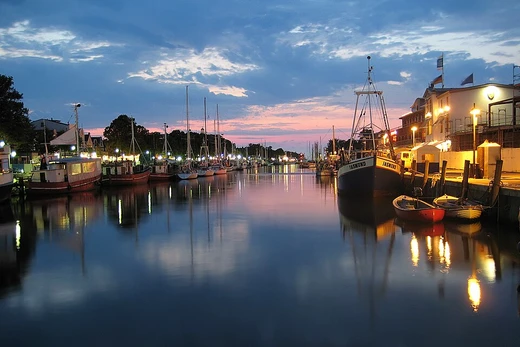
Canal du Midi
17th-century canal linking Atlantic and Mediterranean in southern France.

It is considered one of the greatest construction works of the 17th century and connects the Garonne to the Étang de Thau on the Mediterranean, forming part of the Canal des Deux Mers that joins the Atlantic to the Mediterranean.
- location
- Southern France (departments of Hérault, Aude, and Haute-Garonne)
- designer_supervisor
- Pierre-Paul Riquet
- authorizing_monarch
- Louis XIV
Lore & Background
The key challenge, raised by Riquet, was to convey water from the Montagne Noire to the Seuil de Naurouze, the highest point of the canal. The canal is a summit-level canal, climbing from Toulouse over 52 km to the Seuil de Naurouze, with a total rise of 57.18 meters, then descending 188 km to the Étang de Thau.
Reader's Guide
The Canal du Midi is significant as one of the oldest canals in Europe still in operation, with its construction considered a major engineering achievement of the 17th century. The canal's design depth is two meters, with a surface width averaging 20 meters, and it includes the longest canal pound of 53.87 km between Argens Lock and the Fonserannes Locks. The challenges faced during its construction, particularly water supply to the summit level, remain relevant to inland water transport today.
Engineering Classification: A True Divide-Crossing Canal
The Canal du Midi is classified as a true canal rather than a mere navigation. While a navigation simply parallels an unimproved river within the same drainage basin, a true canal cuts across a drainage divide, creating a navigable channel that links two entirely different drainage basins. The Canal du Midi exemplifies this by connecting valleys over a higher body of land, meaning it does not follow a single natural watercourse but instead traverses elevated terrain between separate watersheds. This fundamental design choice makes it more complex to build than a navigation, since it cannot rely on a single river's natural gradient. Instead, it must maintain its own water levels independently, often requiring an external water source positioned above the canal's highest elevation point. The engineering demands of crossing a ridge rather than following a valley floor distinguish it from simpler waterway improvements and place it in the same category as other major divide-crossing projects.
Construction Method and Water Management
The Canal du Midi was built using the human-made stream method of canal construction, a technique applied where no existing stream provides the necessary waterway. In this approach, the canal body is either excavated or its banks are formed by piling dirt, stone, concrete, or other building materials to create the finished cross-sectional shape known as the canal prism. Because the waterway must traverse higher ground between valleys, its water supply cannot come from the terrain it crosses; instead, it must be fed by an external source such as streams or reservoirs situated at a sufficient elevation. Where the canal's course requires changes in height, engineering works including locks, lifts, or elevators are constructed to raise and lower vessels between different water levels. These structures work alongside weirs and dams that maintain usable depths, and in some cases looping descents that create longer, gentler channels around difficult stretches. The combination of these elements allows the Canal du Midi to function as a navigable route across otherwise impassable elevated terrain.
Historical Commercial Context
Canals like the Canal du Midi existed within a broader historical framework in which artificial waterways were of immense importance to commerce, development, and the vitality of civilizations. The movement of bulk raw materials—coal, ores, and other goods essential for urbanization and industrialization—was difficult and only marginally affordable without water transport. Canals provided the means to move these heavy cargoes efficiently, and this capability fueled the Industrial Revolution, spawning new research disciplines, new industries, and economies of scale that raised living standards across industrialized societies. The Canal du Midi, as a waterway canal designed to carry vessels transporting goods and people between existing water bodies, participated in this commercial ecosystem. It belonged to a category of canals that connect lakes, rivers, other canals, or seas, rather than serving as a city-internal network. In an era before railways and motor trucks, such waterways were not merely convenient alternatives but practical prerequisites for the economic growth that transformed entire regions.
Place Among Major Canals and the Modern Landscape
The Canal du Midi is grouped alongside the Canal de Briare and the Panama Canal as a prime example of a canal connecting valleys over a higher body of land, requiring the full suite of engineering works to manage elevation changes. This places it in the same engineering family as the most ambitious divide-crossing waterways. In the broader taxonomy of artificial waterways, it falls under waterway canals used for carrying vessels, as opposed to aqueducts designed for potable water delivery, hydro power, or agricultural irrigation. The historical trajectory of canals in this category has been one of gradual displacement. Beginning in the 1840s in the United Kingdom, canal shipping was first augmented and then superseded by the faster, less geographically constrained railway system. By the early 1880s, many canals could no longer compete with rail transport and were abandoned. After the First World War, motor trucks and expanding road networks further reduced freight volumes on inland waterways. Today, most smaller canal networks have been supplanted, filled in, or maintained primarily for flood control and pleasure boating, while the largest ship canals continue to service bulk cargo and oceangoing vessel transportation.
Frequently Asked Questions
Who designed and supervised the Canal du Midi?
Pierre-Paul Riquet served as the engineer and overall supervisor of the project. His work was carried out under the authority of King Louis XIV in the late 1600s.
Why is the Canal du Midi considered so significant?
It is widely regarded as one of the most impressive engineering feats of the 17th century. The canal also forms a key segment of the Canal des Deux Mers, which ties the Atlantic Ocean together with the Mediterranean.
More in Canals And Artificial Waterways 1-19
Spotted an error? Know more?
This is a living reference — every entry is fact-audited, and reader corrections feed straight into our audit queue. Suggest an edit · See this site's audit record