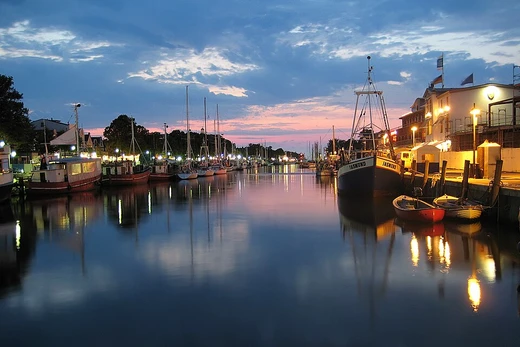
Albert Canal

The Albert Canal is a major waterway in northeastern Belgium, named for King Albert I of Belgium.
- depth
- 3.4 metres (11 ft)
- overhead_clearance
- 6.7 metres (22 ft), being heightened to 9.1 metres (30 ft)
- elevation_difference
- 56 metres (184 ft)
- number_of_locks
- 6
Reader's Guide
The Albert Canal significantly reduced water travel time between Antwerp and Liège: before its completion, the journey took about seven days, whereas in the 21st century it can be covered in about 18 hours. The canal has six locks to overcome a 56-metre elevation difference, with five locks having a 10-metre lift and one at Wijnegem having a 5.45-metre lift. Today it is also a popular leisure and cycling destination.
Did You Know?
- The Albert Canal was named for King Albert I of Belgium.
- It took about seven days to travel from Antwerp to Liège by water before the canal was completed, but in the 21st century the same distance takes about 18 hours.
A 3,000-Mile Coastal Lifeline
The Intracoastal Waterway stretches roughly 3,000 miles along the eastern and southern shores of the United States. Its route begins in Massachusetts, traces the Atlantic Seaboard southward, wraps around the southern tip of Florida, and then follows the Gulf Coast all the way to Brownsville, Texas. What makes the ICW distinctive is its hybrid character: some stretches rely on natural inlets, saltwater rivers, bays, and sounds, while others are entirely artificial canals. The United States Army Corps of Engineers is responsible for maintaining, improving, and dredging the waterway where needed, ensuring a navigable passage from end to end. The practical benefit for mariners is significant—traveling the ICW offers a protected inland alternative to open-ocean sailing, sparing vessels from the storms and other hazards that make coastal ocean travel risky. In essence, it functions as a continuous, government-sustained highway on water that threads through the most geographically diverse stretches of the American coastline.
Gallatin's Ambitious Blueprint
His vision identified four critical necks of land interrupting an otherwise continuous tide-water route from Massachusetts to Georgia: the Isthmus of Barnstable, the stretch of New Jersey between the Raritan and Delaware rivers, the peninsula separating the Delaware from the Chesapeake, and the marshy tract dividing the Chesapeake from Albemarle Sound. Gallatin proposed canals at each of these chokepoints, estimating the canal work alone at roughly three million dollars. His broader ten-year plan totaled twenty million dollars and was never approved by Congress. Yet the War of 1812 and the British blockade that followed proved his geographic reasoning sound. Three of his four proposed canal sections still exist in some form today, while the Delaware and Raritan Canal was eventually abandoned for alternative infrastructure.
Tolls, Veto, and the Fight for Free Waterways
The political battle over waterway funding in the late nineteenth century revealed deep tensions between competing transportation interests. President Chester Arthur vetoed the measure, calling it a waste of the government's growing budget surplus, but Congress overrode his veto.
From Inland Canals to the Great Loop
The Intracoastal Waterway did not emerge fully formed; it grew out of centuries of incremental improvement to natural coastal channels and man-made canals. Over time, these internal improvements coalesced into what is now known as the Great Loop—a waterborne circumnavigation of the eastern continental United States that requires minimal open-ocean travel, with the ICW forming its eastern leg.
Frequently Asked Questions
Who is the Albert Canal named after?
The waterway takes its name from King Albert I of Belgium, who reigned during the period when the project was conceived and built.
Which cities and rivers does the Albert Canal link?
It runs between Antwerp and Liège in northeastern Belgium, tying together the Scheldt and Meuse river systems while also intersecting the Dessel–Turnhout–Schoten Canal.
More in Canals And Artificial Waterways 1-19
Related in Canals And Artificial Waterways
Links follow this subject's own source article.
Spotted an error? Know more?
This is a living reference — every entry is fact-audited, and reader corrections feed straight into our audit queue. Suggest an edit · See this site's audit record