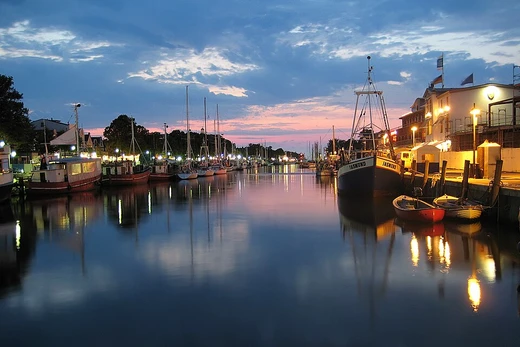
Erie Canal
Historic New York canal connecting the Hudson River to Lake Erie.

The Erie Canal is a historic canal in upstate New York that runs east–west between the Hudson River and Lake Erie. Completed in 1825, the canal was the first navigable waterway connecting the Atlantic Ocean to the upper Great Lakes above Niagara Falls, vastly reducing the costs of transporting people and goods across the Appalachians. The Erie Canal accelerated the settlement of the Great Lakes region, the westward expansion of the United States, and the economic ascendancy of New York state.
- length_original
- 363 miles (584 km)
- length_modern
- 351 miles (565 km)
- width_original
- 40 feet (12 m)
- depth_original
- 4 feet (1.2 m)
- elevation_difference
- about 565 feet (172 m)
- number_of_locks
- 35
- peak_year
- 1855
Verified Timeline
Lore & Background
A canal from the Hudson River to the Great Lakes was first proposed in the 1780s, but a formal survey was not conducted until 1808. The New York State Legislature authorized construction in 1817. Political opponents of the canal, referring to its lead supporter New York Governor DeWitt Clinton, denigrated the project as 'Clinton's Folly' and 'Clinton's Big Ditch'. The canal saw quick success upon opening on October 26, 1825, with toll revenue covering the state's construction debt within the first year of operation. The westward connection gave New York City a strong advantage over all other US ports and brought major growth to canal cities such as Albany, Utica, Syracuse, Rochester, and Buffalo. The construction of the Erie Canal was a landmark civil engineering achievement in the early history of the United States. When built, the 363-mile (584 km) canal was the second-longest in the world after the Grand Canal in China. Initially 40 feet (12 m) wide and 4 feet (1.2 m) deep, the canal was expanded several times, most notably from 1905 to 1918 when the 'Barge Canal' was built and over half the original route was abandoned. The modern canal measures 351 miles (565 km) long, 120 feet (37 m) wide, and 12 feet (3.7 m) deep. It has 35 locks, including the Waterford Flight, the steepest locks in the United States. The overall elevation difference is about 565 feet (172 m). The Erie's peak year was 1855, when 33,000 commercial shipments took place. It continued to be competitive with railroads until about 1902, when tolls were abolished. Commercial traffic declined heavily in the latter half of the 20th century due to competition from trucking via the newly developed Interstate Highway System and the 1959 opening of the larger St. Lawrence Seaway. The canal's last regularly scheduled hauler, the Day Peckinpaugh, ended service in 1994.
Reader's Guide
The Erie Canal was a transformative infrastructure project that reshaped the economic and geographic landscape of the United States. By providing a cost-effective water route across the Appalachians, it slashed transport costs by about 95 percent and opened the Great Lakes region to settlement and commerce. The canal accelerated the westward expansion of the United States and cemented New York City's dominance as a port, while spurring growth in cities like Albany, Utica, Syracuse, Rochester, and Buffalo. Its success demonstrated the power of state-funded public works and inspired similar canal projects nationwide. Though commercial traffic declined after the rise of railroads, trucking, and the St. Lawrence Seaway, the Erie Canal remains in use today primarily for recreational boating. It connects three other canals in the New York State Canal System and is part of the Great Loop route for long-distance boaters. The canal has become a tourist attraction, with parks, museums, and the New York State Canalway Trail, a popular cycling path. In 2000, Congress designated the Erie Canalway National Heritage Corridor to protect and promote the system. The modern waterway differs significantly from the original, as more than half of the original route was destroyed or abandoned during the early 20th-century construction of the Barge Canal.
Did You Know?
- The Erie Canal was the second-longest canal in the world when built, after the Grand Canal in China.
- Toll revenue covered the state's construction debt within the first year of operation after opening on October 26, 1825.
- The Waterford Flight contains the steepest locks in the United States.
- The canal's last regularly scheduled hauler, the Day Peckinpaugh, ended service in 1994.
- More than half of the original Erie Canal route was destroyed or abandoned during construction of the New York State Barge Canal in the early 20th century.
More in Canals And Artificial Waterways 1-19
Related in Canals And Artificial Waterways
Links follow this subject's own source article.
Spotted an error? Know more?
This is a living reference — every entry is fact-audited, and reader corrections feed straight into our audit queue. Suggest an edit · See this site's audit record